Creating Visual Balance With Tabletop Décor
Tabletops often serve as visual anchors within a room. Coffee tables, dining tables, side tables, and consoles all present opportunities for styling that bring balance and clarity to an interior. The objects placed on these surfaces influence how a space is read at first glance.
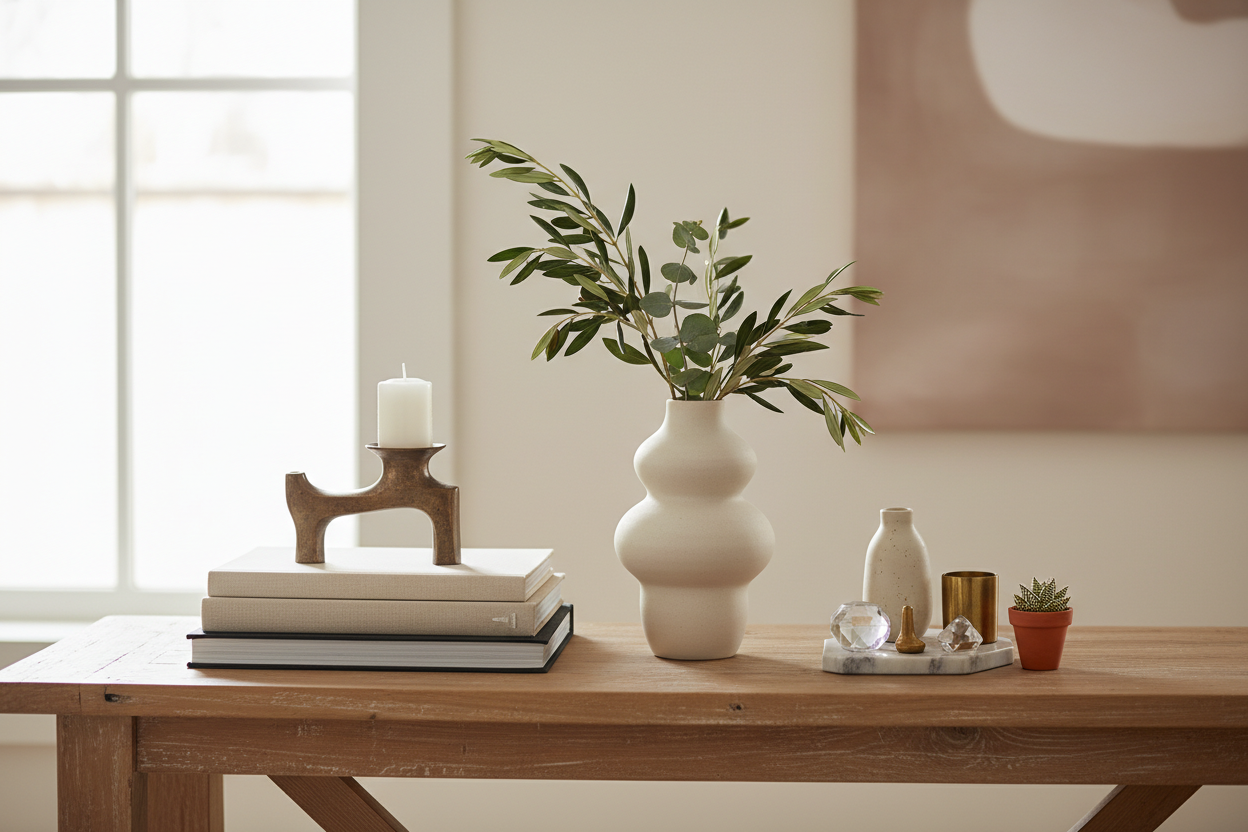
Balance does not mean symmetry. While mirrored arrangements offer structure, asymmetrical compositions often feel more dynamic. A table lamp paired with a vase of contrasting height creates visual tension that draws the eye. Candle holders grouped in uneven numbers introduce rhythm while maintaining cohesion.
Scale is a key factor. Objects that are too small can appear lost, while oversized pieces may dominate the surface. Successful tabletop styling considers the table’s dimensions and surrounding furniture. A wide console benefits from elongated arrangements, while smaller side tables call for fewer, more intentional pieces.
Layering adds depth. Combining objects of varying heights and materials prevents flat compositions. A vase placed beside a lamp creates vertical variation, while candle holders introduce mid-level interest. The goal is to guide the eye upward and downward rather than keeping everything on a single plane.
Function should remain part of the equation. Decorative objects coexist best when they do not interfere with daily use. Trays help organize smaller items, giving structure to the display. This approach keeps surfaces visually composed while remaining practical.
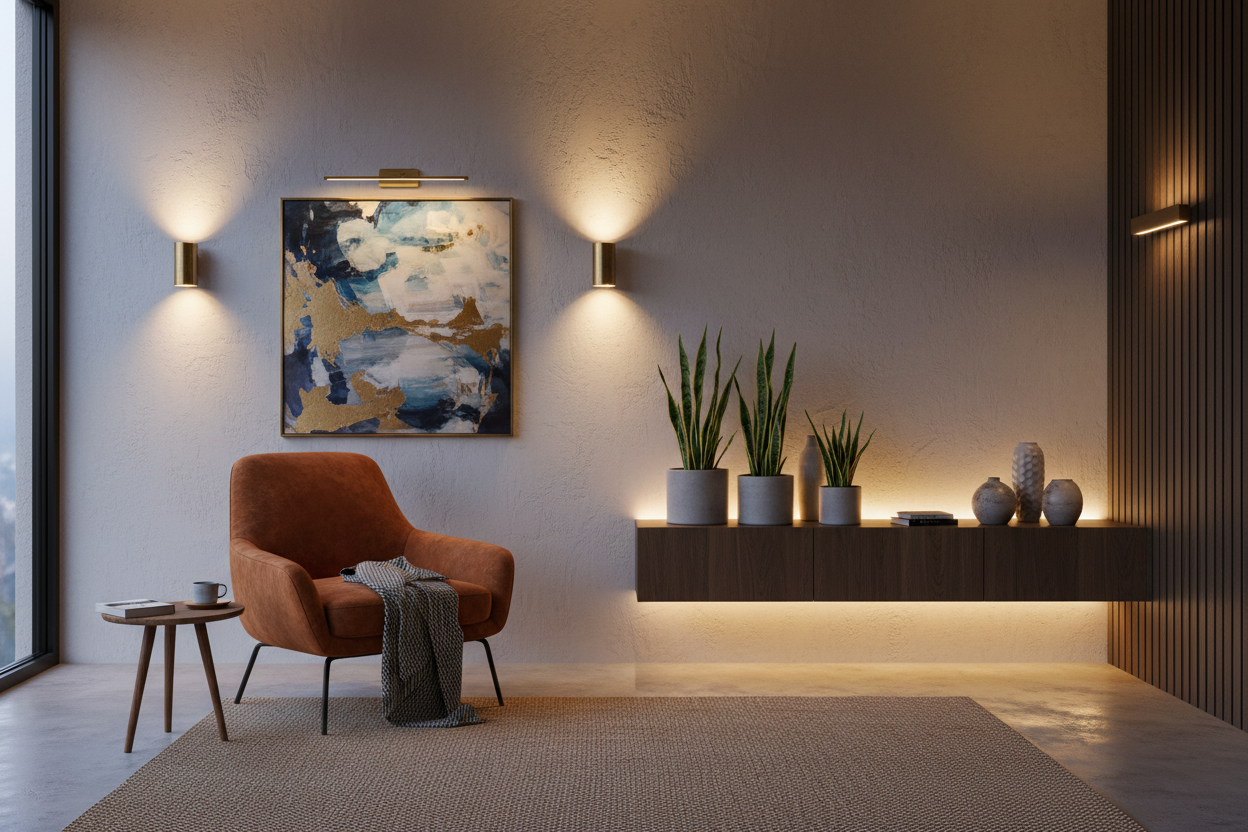
Lighting enhances tabletop arrangements dramatically. Table lamps define the area after sunset, turning the surface into a focal point. Candle holders add a secondary glow that softens the scene and introduces subtle movement through light variation. Together, they transform a static arrangement into a living visual moment.
Tabletop décor is an exercise in restraint and intention. By considering scale, balance, layering, and light, these small surfaces become powerful design statements. They connect the room’s larger elements and offer moments of visual pause within the broader interior.